Management of thrombotic catheter occlusion with urokinase
Management of thrombotic catheter occlusion with urokinase
Central venous access devices (CVADs) play an important role in modern healthcare, providing essential access for therapies including dialysis, chemotherapy, parenteral nutrition and critical care interventions. However, one of the challenges associated with CVADs is occlusion, which can disrupt treatments, increase infection risks1-3 and lead to costly catheter replacements.
Catheter occlusion can occur in various medical settings, with each application facing distinct challenges.
Catheter occlusion can occur in various medical settings, with each application facing distinct challenges.


How common is catheter occlusion?
How common is catheter occlusion?
CVAD occlusion is a frequent and disruptive issue that occurs in 14 to 36 % of patients within the first 1 to 2 years of catheter placement.4 In fact, more CVADs are removed due to dysfunction (43 %) than infection (32 %) every year.5 Certain patient groups face even higher risks – oncology patients, for instance, are particularly vulnerable due to the pro-thrombotic effects of many chemotherapy drugs, and haemodialysis patients often experience catheter-related complications due to blood stasis and clot formation.

How to recognise an occluded catheter
How to recognise an occluded catheter
An occluded catheter may present with the following signs.6
- Increased resistance during infusion
- Increased resistance during withdrawal
- Difficulty or inability to withdraw blood
- A significant drop in blood flow rate (BFR) below 300 ml/min during haemodialysis
- A decrease in BFR of 10 % or more from the optimal rate during haemodialysis
Types of catheter occlusion
Types of catheter occlusion
Catheter occlusions can develop from various thrombotic formations, each affecting catheter function in unique ways.
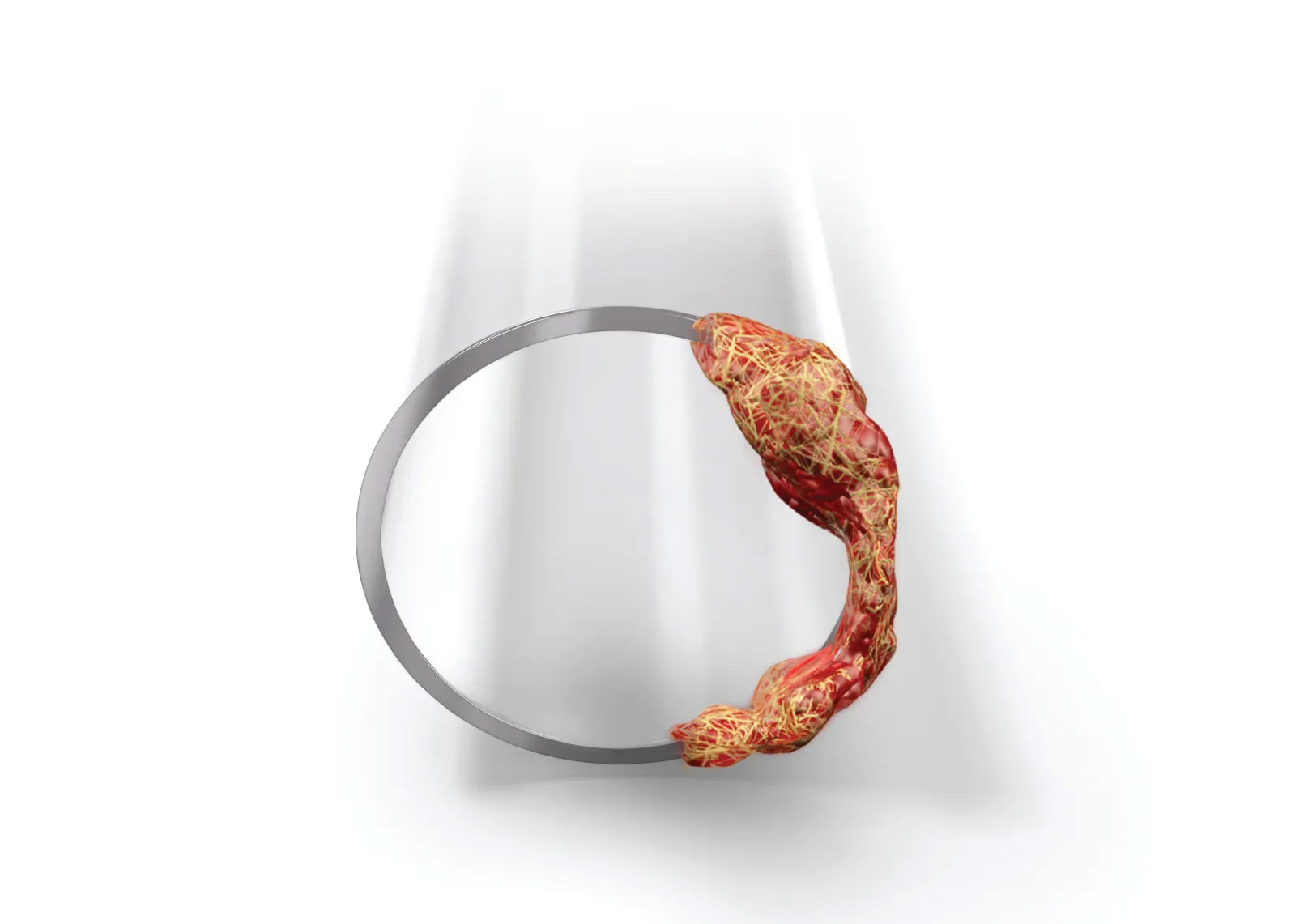
- Intraluminal clots account for 5 to 25 % of occlusions,4 and may occur independently or in combination with other types of blockages. They occur when stagnant blood inside a CVAD forms a clot, often due to loss of locking solution pressure. This can allow blood cells and debris to infiltrate the catheter tip.
- Fibrin tails develop when a fibrin clot forms a tail-like extension on one side of the CVAD. This disrupts flow dynamics and can make blood withdrawal difficult or impossible if the tail obstructs the catheter tip.6
- Mural thrombi form when blood clots adhere to the vessel wall at the catheter tip, often due to endothelial injury from catheter movement within the vein. Over time, they can enlarge and contribute to significant complications, including catheter dysfunction and an increased risk of infection.
- Fibrin sheaths are among the most common causes of thrombotic obstruction, and may begin forming as early as 24 hours after catheter insertion.4 In severe cases, they can fully encase the catheter, leading to an intermittent or complete blockage. Catheter-related sheaths can cover 33 to 100 % of the intravascular length.7

The real-world impact of catheter dysfunction
The real-world impact of catheter dysfunction
Catheter occlusion isn’t just a minor inconvenience – it has far-reaching consequences for both patients and healthcare providers.


Discover more about Syner-KINASE
Discover more about Syner-KINASE
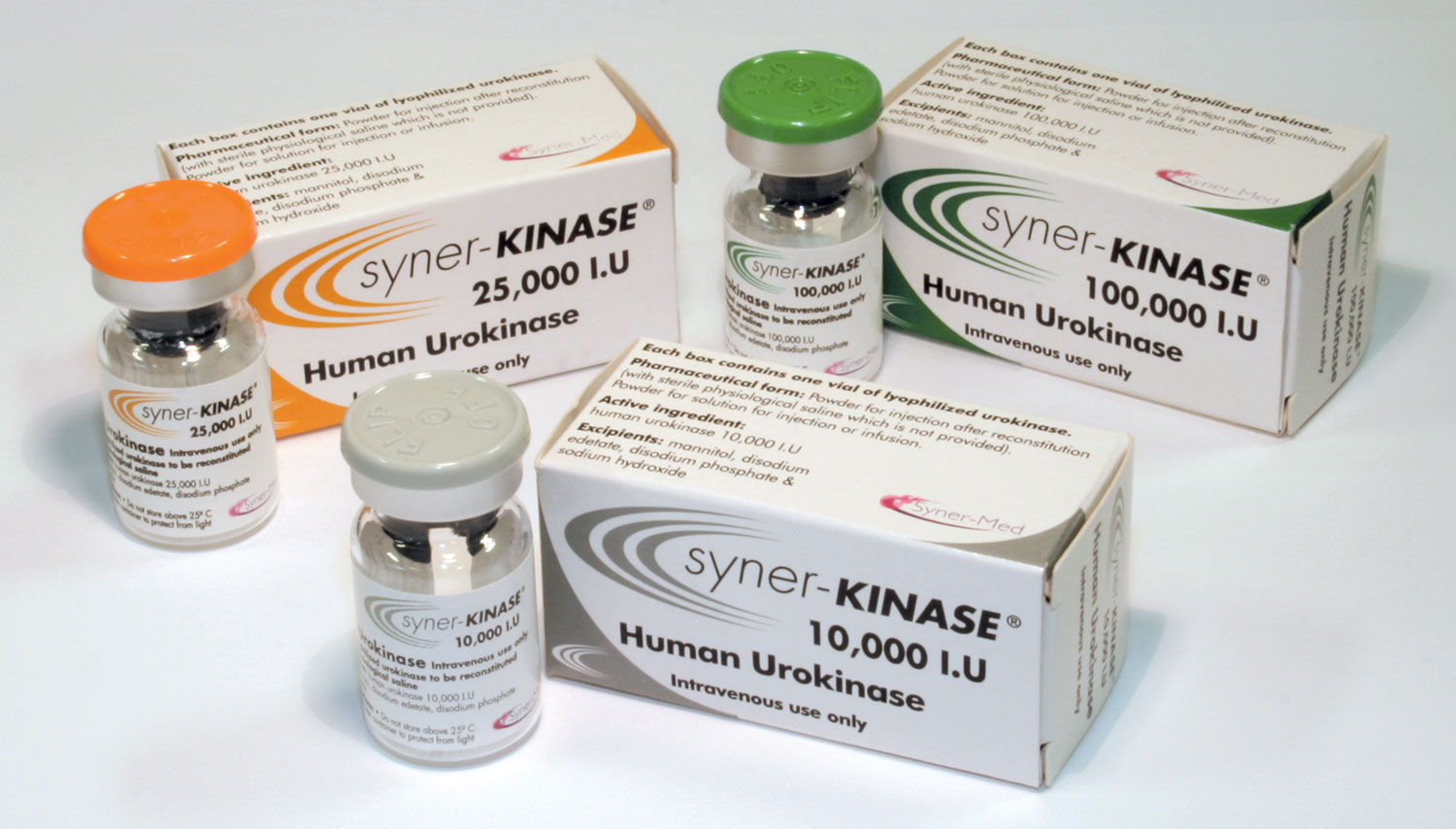

Adverse events should be reported. Reporting forms and information can be found at www.mhra.gov.uk/yellowcard.
Adverse events should also be reported to Syner-Med (PP) Ltd. Tel: +44 (0)208 655 6380
For Syner-KINASE prescribing information, click here
References
- Faintuch S, Salazar GMM. Malfunction of dialysis catheters: Management of fibrin sheath and related problems. Tech Vasc Interventional Rad. 2008;11:195-200.
- Van Rooden CJ et al. Infectious complications of central venous catheters increase the risk of catheter-related thrombosis in hematology patients: a prospective study. Journal of Clinical Oncology. 2005;23(12):2655-2660.
- Larsen M KS, et al. Use of cultivation-dependent and –independent techniques to assess contamination of central venous catheters: a pilot study. BMC Clinical Pathology. 2008;8:10. doi:10.1186/1472-6890-8-10
- Baskin JL, et al. Management of occlusion and thrombosis associated with long-term indwelling central venous catheters. The Lancet. 2009;374(9684):159-169. doi:10.1016/s0140-6736(09)60220-8
- Pengloan, J. Obstructed central venous catheters in haemodialysis. Hospital Pharmacy Europe. Accessed 29th February 2025. Available at: https://hospitalpharmacyeurope.com/clinical-zones/haematology/obstructed-central-venous-catheters-in-haemodialysis/
- Chan MR, et al. Haemodialysis Central Venous Catheter Dysfunction. Seminars in Dialysis. 2008;21(6):516-521. doi:10.1111/j.1525-139X.2008.00495.x
- Forauer AR. Jugular vein catheter placement: histologic features and development of catheter-related (fibrin) sheaths in a swine model. Radiology. 2006;240(2):427-34. doi: 10.1148/radiol.2402031129
- Syner-Med. 2025. Data on file. Resource impact model evaluating Syner-Kinase® for catheter occlusion management in NHS settings. Model version 1.0.